
Hidden courtyards. Crumbling palazzi. Rooftop dinners under streaks of lavender sky. In Lecce and across southern Italy, a quiet revolution is reshaping the way people build, restore, and live. I call it the Italian Riad – part home, part retreat, part design philosophy. It’s inspired by Moroccan riads and Mediterranean architecture, yet deeply rooted in Italy’s own DNA: inward-facing spaces, stone walls that stay cool in summer, staircases leading to intimate rooftop terraces, and a lifestyle centered on slowness, ritual, and hospitality.
I don’t see this as a real estate trend. It’s a blueprint for conscious development in Puglia – one that honors history while reimagining how we inhabit it.
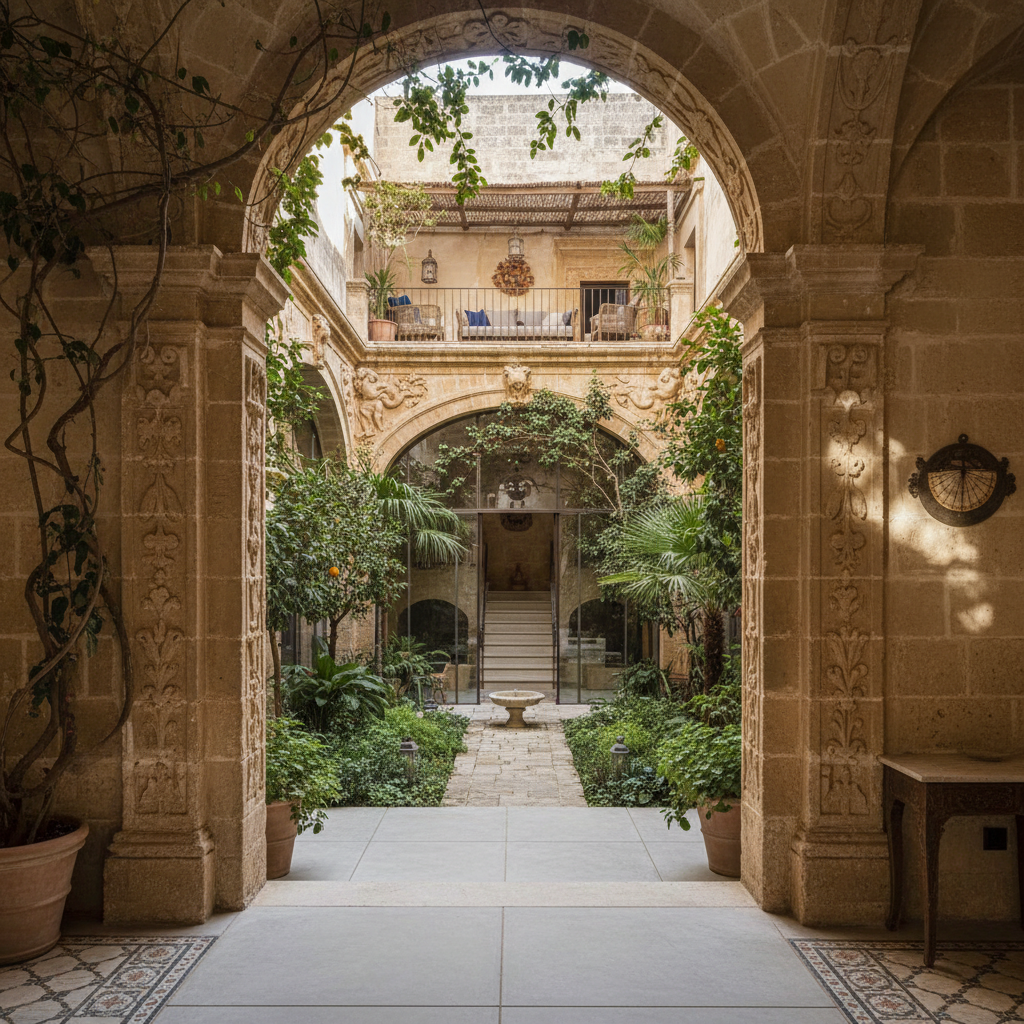
What do i mean by an Italian Riad?
While a Moroccan riad is built around a central courtyard for climate control and privacy, the Italian version leans on centuries of local tradition:
- Enclosed giardini segreti (secret gardens) that offer tranquility and a connection to nature
- Atriums and cloisters in palazzi, which foster a sense of history and contemplation
- Masserie with internal courtyards, embodying rural hospitality and resilience
- Roof terraces designed for evening cooling and socializing, blending comfort with community
The “Italian Riad” captures the magic of these spaces and translates them into modern living environments: a home that feels like a sanctuary, a guesthouse that feels like a story, and a design experience that feels both ancient and personal. It’s not just about aesthetics – it’s about restoration with intention, where every detail is chosen to enhance well-being, sustainability, and a sense of belonging. This approach redefines heritage as a living, evolving experience, inviting residents and guests to participate in its narrative.
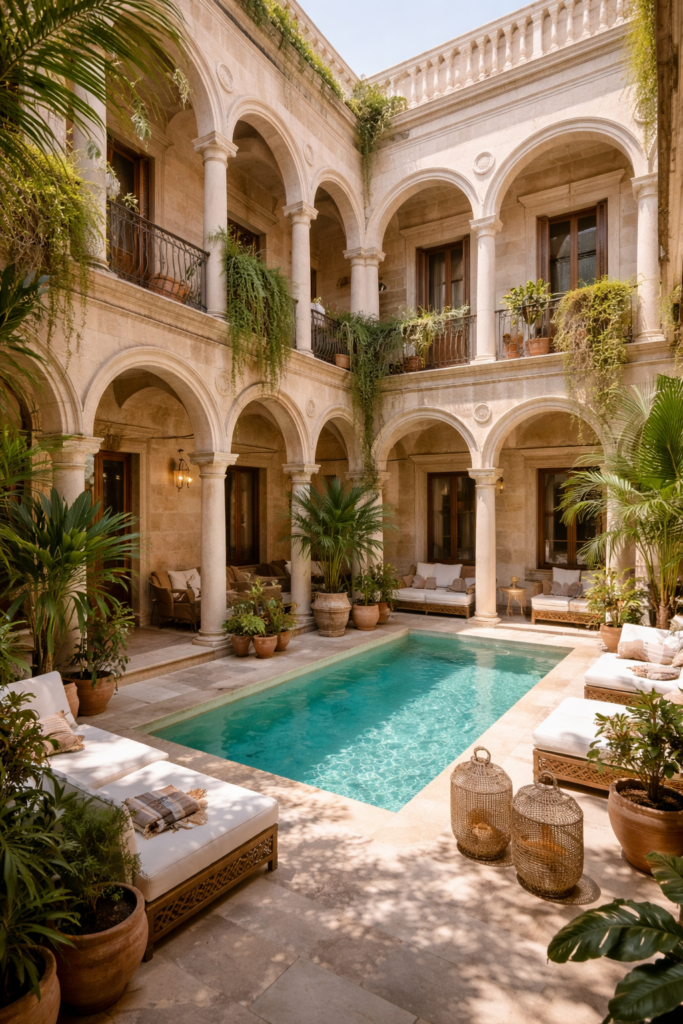
Why Lecce Is the Perfect Canvas
Lecce isn’t just beautiful—it’s architecturally predisposed to a new movement in Italian living. Its Baroque bones, climate, and spirit of restoration make it an ideal laboratory for innovative design and meaningful hospitality.
1. The Baroque Bones Are Already There
Lecce’s palazzi were built with thick Lecce stone, hidden inner courtyards, and labyrinthine layouts long before “riads” became a design reference. Most of the work is about revealing, not reinventing – unearthing the layers of history and intention that define these spaces. This approach honors the past while inviting contemporary reinterpretation, making Lecce a living archive of architectural possibility.
2. The Climate Makes Courtyard Living Natural
Hot days, cooler nights, and breezy rooftops create the perfect conditions for inward-facing homes and outdoor-indoor living. Lecce’s climate fosters a lifestyle that values connection to nature, privacy, and community—a model for sustainable, soulful living in an increasingly urbanized world.
3. A Wave of Restoration, Not Demolition
Unlike other Italian regions, where building new is the norm, Puglia’s movement is toward reviving. People want spaces with patina, story, and soul – places that reflect the passage of time and the resilience of local traditions. This ethos of restoration is not just about aesthetics; it’s a response to a global desire for authenticity and continuity in an age of rapid change
4. A New Generation of Designers and Hosts
Architects, artisans, and hospitality entrepreneurs are transforming old structures into boutique guesthouses, creative retreats, and hybrid home-studio spaces. Lecce is quickly becoming a lab for slow, meaningful development—a place where design is not just about form, but about fostering connection, creativity, and well-being. This new generation is redefining what it means to live, work, and host in a historic city, making Lecce a beacon for thoughtful, intentional living.

More Than Aesthetic: A Cultural Shift
The Italian Riad is resonating because it answers a craving we’re all feeling:
- More beauty
- More privacy
- More intentionality
- More connection to place (sense of place and space)
- Less rush, noise, and generic living
In a world exhausted by speed, the riad structure pulls us inward- literally and metaphorically. It asks: How do you want to live? Not how quickly you can get from A to B.
A New Kind of Hospitality
Airbnbs are everywhere. Boutique hotels are everywhere. Luxury hotels are definitely everywhere. But an Italian Riad offers something different: immersive slowness. Guests don’t just sleep there – they inhabit the architecture.
Imagine:
- Breakfast under vaulted ceilings
- Aperitivo in a courtyard scented with jasmine
- A clawfoot tub next to a stone window arch
- A rooftop dinner cooked in an outdoor kitchen
- Stargazing from a private terrazza
This is hospitality as atmosphere – not amenities.
Why This Trend Matters for Puglia’s Future
Puglia has long lived with a quiet tension: how do you welcome the world without sanding down the soul? Large-scale hospitality often follows a familiar script — international standards, recognizable luxury markers, and interchangeable experiences. The result? Places that look impressive, but could exist anywhere. The Italian Riad proposes a different path. Not less luxury – but a more intentional one.
Restore, Don’t Replace
The Italian Riad embodies the global movement of sustainable development. By restoring historic buildings rather than demolishing them, these spaces reduce environmental impact, preserve cultural heritage, and support local economies. This approach proves that comfort and authenticity can coexist, and that true progress respects the past.
Craftsmanship as the Ultimate Luxury
Italian Riads celebrate the global trend of slow living, where quality, mindfulness, and authenticity are valued over speed and convenience. Local artisans—stone carvers, ironworkers, ceramicists—are placed at the heart of the experience. True luxury here is knowing who made the door handle, not necessarily how many stars the property has.
Experience Over Rating
Italian Riads aren’t trying to win stars, badges, or memberships. They’re designed to be felt, not certified. They reflect the rise of experiential travel, where travelers seek meaningful, transformative experiences rather than superficial amenities. Guests don’t come for uniformity; they come for atmosphere, intimacy, and a sense of belonging. Luxury lives in silence, space, texture, and time—not in checklists.
Community Over Speculation
When development is driven purely by return on investment, cities hollow out. Thoughtful, small-scale projects are part of a global shift toward community-driven development. When development is driven by connection rather than only the bottom line, cities remain vibrant and alive. Italian Riads create jobs, support local ecosystems, and keep historic centers alive year-round.
Spaces With Purpose
he most successful Italian Riads would not just be places to sleep – they are lived-in environments: homes, creative residencies, micro-retreats, cultural salons. This reflects the global movement toward multifunctional spaces that blur the line between private and public, past and present.
Luxury Without the Label
You can be a luxury destination without stars. Without memberships. Without pretending to be something you’re not. The Italian Riad proves that preservation and progress don’t have to compete. When done right, they elevate each other – quietly, beautifully, and with lasting impact.
As cities around the world grapple with the challenges of rapid development, the Italian Riad offers a blueprint for thoughtful, sustainable growth—a reminder that true luxury lies in authenticity, connection, and respect for place. This is not just a trend for Puglia; it’s a vision for the future of hospitality.
Where i think this Movement Is Heading
You’ll start seeing more:
- Hybrid spaces: part residence, part creative studio, part guesthouse
- Sustainable restorations using lime plaster, as well as reclaimed stone and tiles
- Vertical gardens inside courtyards
- Open-air kitchens on rooftops with barefoot experiences
- Soundproof sanctuaries hidden behind ancient doors
And more people worldwide will discover Lecce not as “the Florence of the South,” but as something entirely its own. A city where slowness is a design principle – not an inconvenience.
The Italian Riad Is Not a Trend. It’s a Philosophy.
It’s a return to a way of living that feels intimate, connected, and human.
It’s architecture that shapes behavior – slowing you down, pulling you inward, inviting reflection.
And in a region facing both opportunity and vulnerability, it offers a guiding principle: Develop with soul. Restore with purpose. Live with intention.