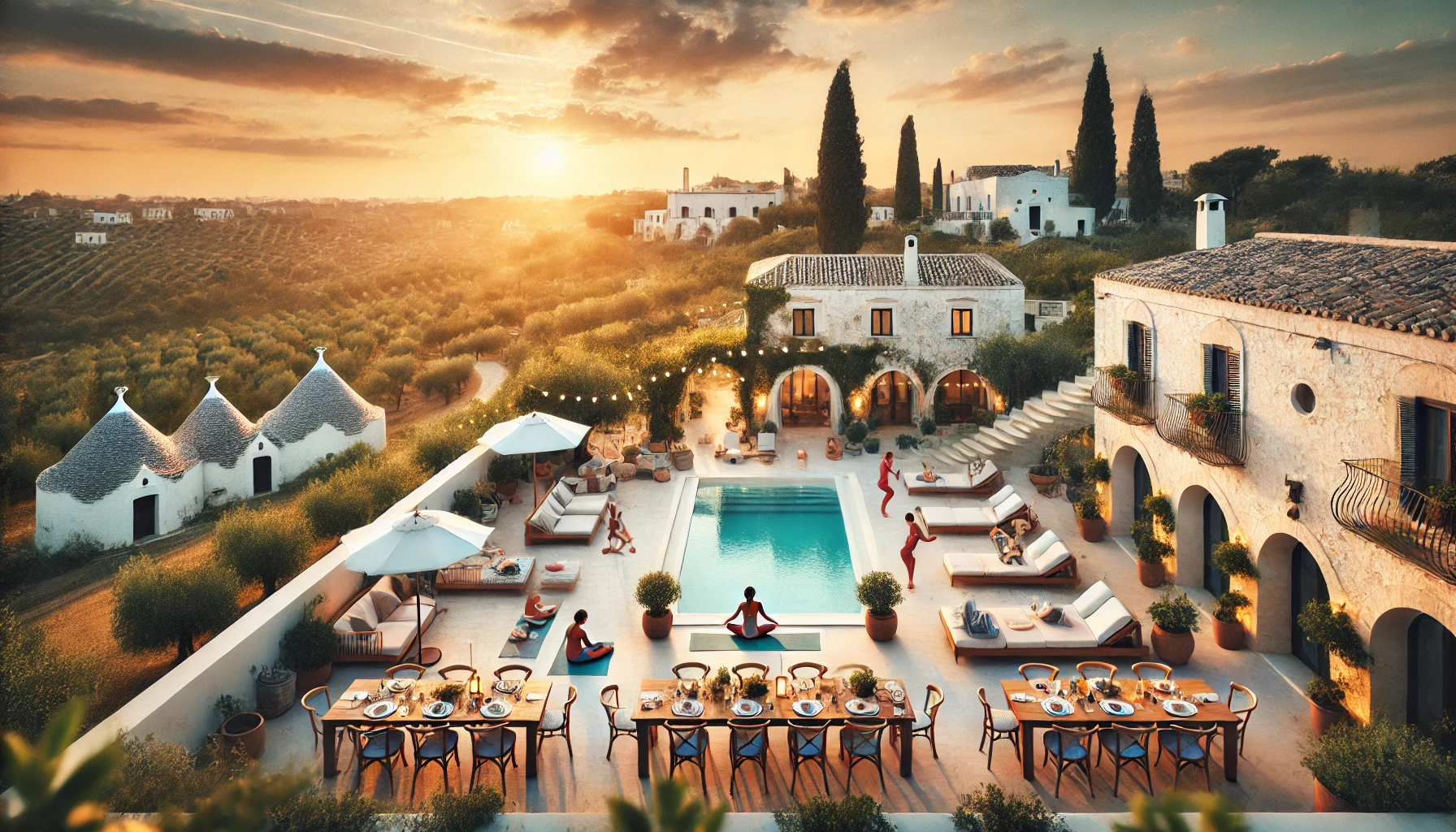
With the charms of the region gracing the covers of magazines and social media accounts worldwide, enthusiasm for yoga retreats in Puglia has increased immensely since the “end” of the COVID pandemic in 2021. But are there too many retreats now?

The Post-Pandemic Pull of Puglia
Puglia arrived at exactly the right moment. A region shaped by sunlight, simplicity, and food that still feels like nourishment rather than content. When borders reopened, people weren’t just craving travel – they were craving repair.
That instinct is not anecdotal. Studies following the pandemic show a marked rise in wellness-motivated travel, with travellers prioritising mental health, physical resilience, and meaning-driven experiences over traditional leisure. Yoga retreats naturally stepped into that gap.
When Escape Isn’t Enough Anymore
There is no doubt that yoga, breathwork, and silence are powerful tools. Clinical research consistently links yoga and mindful movement to reduced cortisol levels, improved nervous system regulation, and better sleep quality. But there is a growing recognition that regulation alone doesn’t equate to long-term wellbeing.
Guests are increasingly looking for:
- Practical frameworks they can take home
- Conversations that extend beyond the mat
- Support for real life, not a temporary pause from it
In short: less escape, more integration.
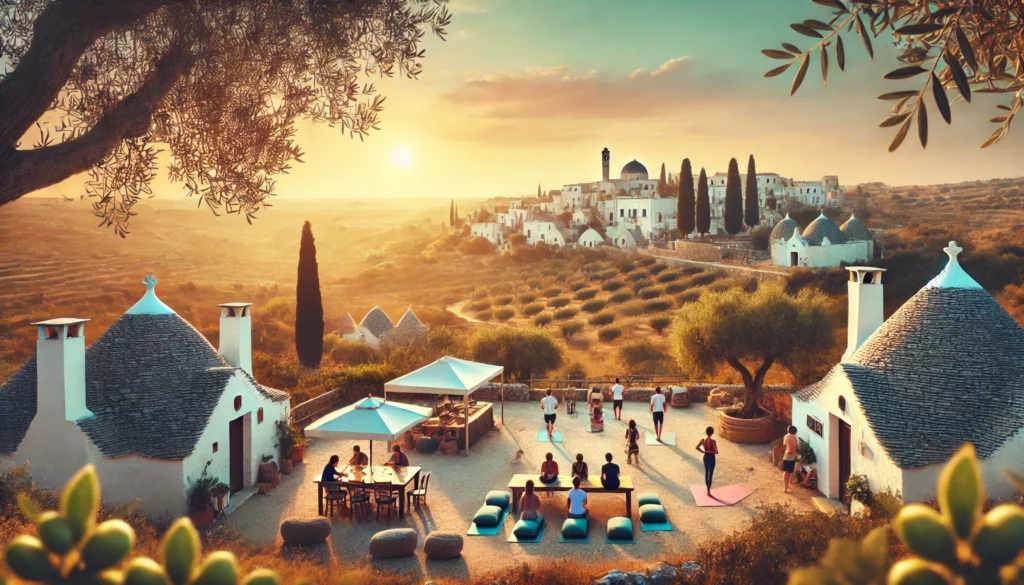
Longevity: The Conversation We’re Ready to Have
Longevity isn’t about biohacking or extending life at all costs. It’s about healthspan — the number of years lived with strength, clarity, and independence.
Puglia, quietly, sits within this conversation. Southern Italy forms part of the broader Mediterranean longevity model, consistently associated with lower cardiovascular risk, reduced cognitive decline, and improved metabolic health. This isn’t mysticism; it’s decades of epidemiological research. But longevity isn’t driven by diet alone.
Large-scale studies on healthy ageing point to a combination of daily low-intensity movement, social connection, purposeful routines, and nutrient-dense, seasonal food. Which raises an obvious question: why aren’t retreats talking about this more openly?
Beyond Yoga: Movement as a Lifelong Practice
Some of the most compelling retreats today are widening their definition of movement. Not everyone needs more intensity. Many people need:
- Mobility and joint health
- Functional strength
- Postural awareness
- Injury prevention
Research in sports science and gerontology increasingly emphasises the role of strength training, balance, and mobility in preventing age-related decline. Walking, swimming, resistance work, stretching – these are not “add-ons.” They are foundational. Yoga fits beautifully into this ecosystem, but it thrives when placed alongside other modalities, not above them.

Nutrition Without Dogma
There is also a growing appetite for nutritional education that is grounded, realistic, and free of extremes.
The Mediterranean dietary pattern — rich in vegetables, legumes, olive oil, fish, and minimally processed foods — is one of the most consistently studied eating models linked to longevity and reduced inflammation. Yet most people struggle not with knowledge, but with application. Inviting nutritionists into retreat settings shifts the focus from rules to understanding:
- Blood sugar balance
- Energy regulation
- Inflammation
- Sustainable habits
Food becomes education, not performance.
The Future: Retreats as Living Laboratories
This is where the concept has the potential to evolve. The next generation of retreats may not be fixed in one place – or one discipline.
Some will:
- Travel intentionally between regions, using place as a teacher
- Explore how different cultures approach movement, ageing, food, and rest
- Offer continuity rather than a single peak experience
Others may remain rooted in one location but layer multiple experiences: yoga alongside strength training, nutrition alongside philosophy, movement alongside honest conversations about life, work, ageing, and purpose.
Adult learning research shows that behavioural change is far more likely when physical experience, reflection, and education are combined rather than delivered in isolation. This isn’t about adding more to the schedule. It’s about depth.
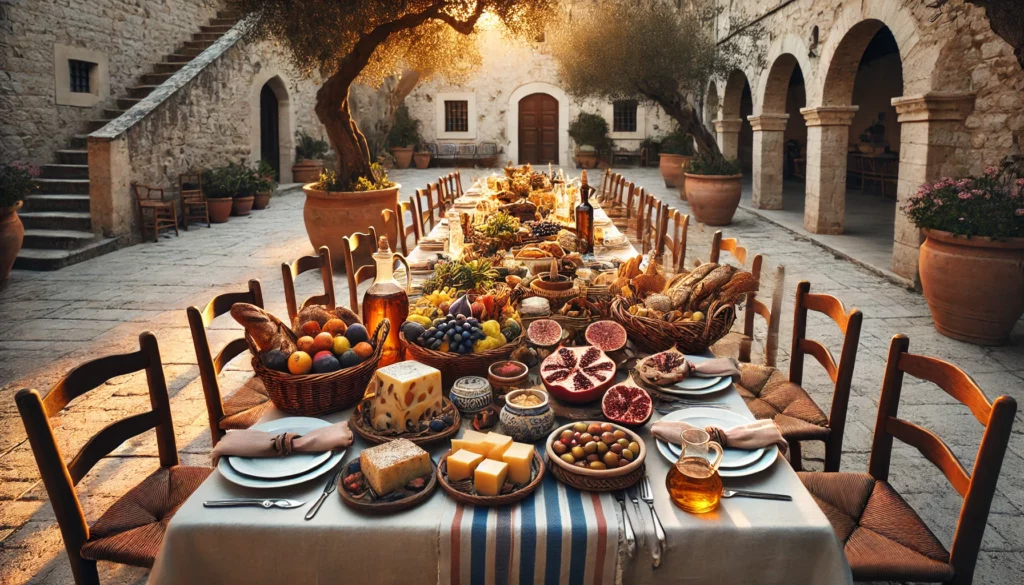
Retreats That Feel Like Life – Just Clearer
The retreats that work best today feel less like an escape and more like a rehearsal for real life. They are:
- Smaller
- More interdisciplinary
- Led by people unafraid of complexity
- Designed for continuity, not dependency
They don’t promise transformation in a week. They offer orientation.
My Sixth Sense Take
So: are there too many yoga retreats in Puglia? Only if yoga is treated as the destination rather than the doorway. There is a very real and growing need for experiences that address how we move, eat, age, recover, and relate – intelligently, collectively, and honestly.
Longevity science is clear on one thing: consistency beats intensity, and integration beats perfection. Puglia understands this instinctively. The retreats that align with that truth – whether rooted here or travelling outward – are the ones that will endure.